
Guides · Cycling in Taiwan
What Changed in Road Wheels Over the Past Decade, Seen Through Two Taiwanese Companies
Somebody who stopped following equipment in 2015 and came back to a road wheel in 2026 would find almost every part replaced. The rim has no braking surface, width has grown from 21 millimetres to over 25, the spokes may be carbon, and the pawls inside the hub have given way to a full ring of star teeth. These shifts did not arrive together, and not all of them matter to every rider. Below they are taken apart one section at a time, using the products of two Taiwanese companies as examples, one building its own wheels and one distributing international components.
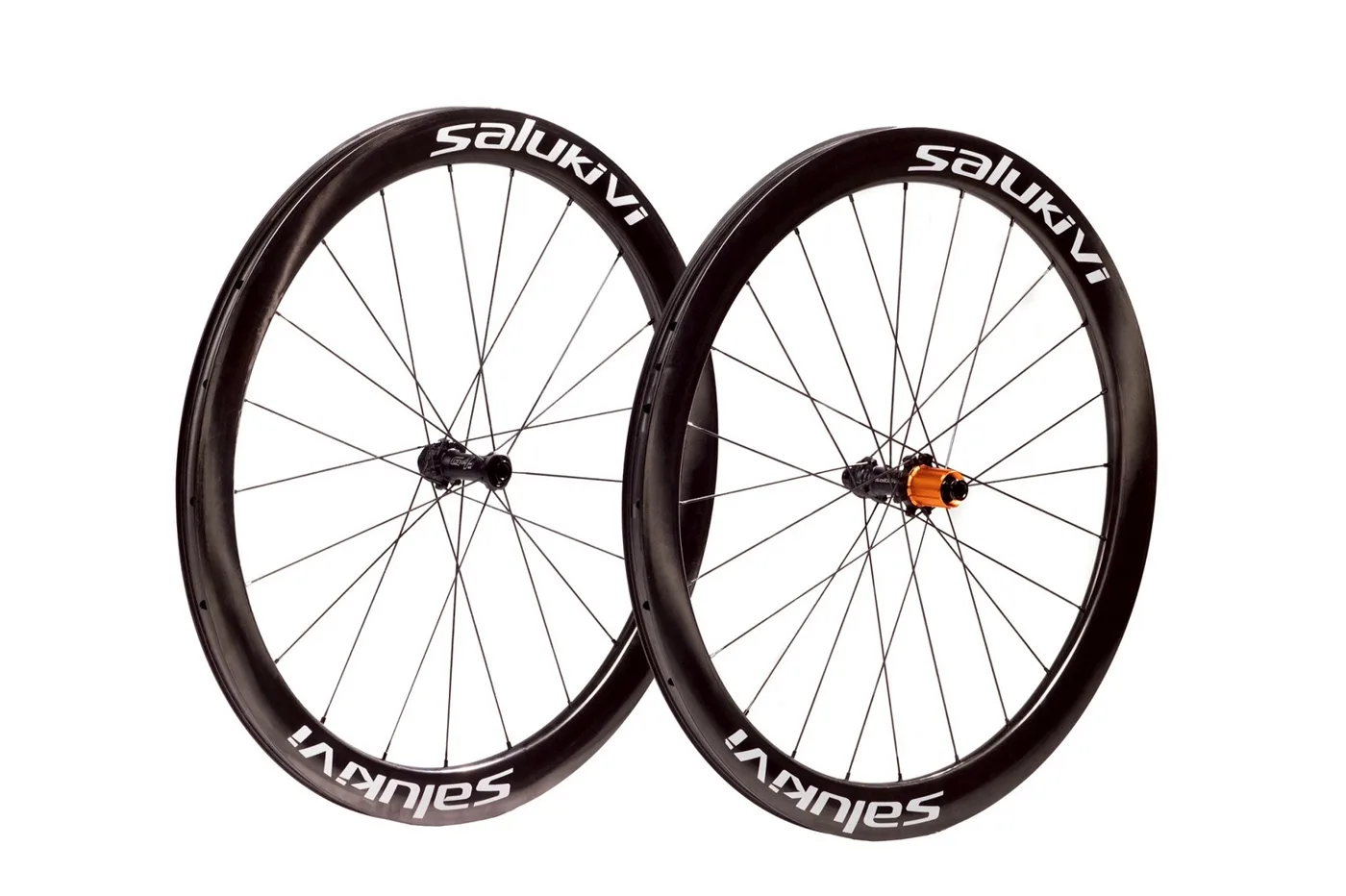
The rim itself, width and braking surface
The single biggest change is that the braking surface is gone. Once disc brakes moved stopping down to the hub, the rim was left with only two jobs, carrying load and managing air, and no longer had to survive a caliper heating and abrading one band of it. Taiwanese brand Salukivi released the KL25A with a ceramic braking surface in 2019, a rim-brake era answer to that problem, and the product line moved to disc afterwards.
The second change is width. A wider rim lets a tyre of the same nominal size sit further open, which changes the contact patch, the rolling resistance and how the tyre supports itself in a corner. When Xinmedia tested the Salukivi KLD30 they recorded a rim width of 25.8 millimetres against a 30 millimetre depth, a ratio rarely seen on a climbing wheel ten years ago.
The logic for choosing depth has not changed, only the range on offer. Salukivi built its SK series in 25, 38 and 55 millimetre depths, followed by the wave-profile KLD4540 and a six-spoke design, then the G3 series in 2024. Deeper rims cut frontal drag and handle crosswind less kindly, a trade-off that has nothing to do with discs or width and has always been there.
Four generations inside the hub
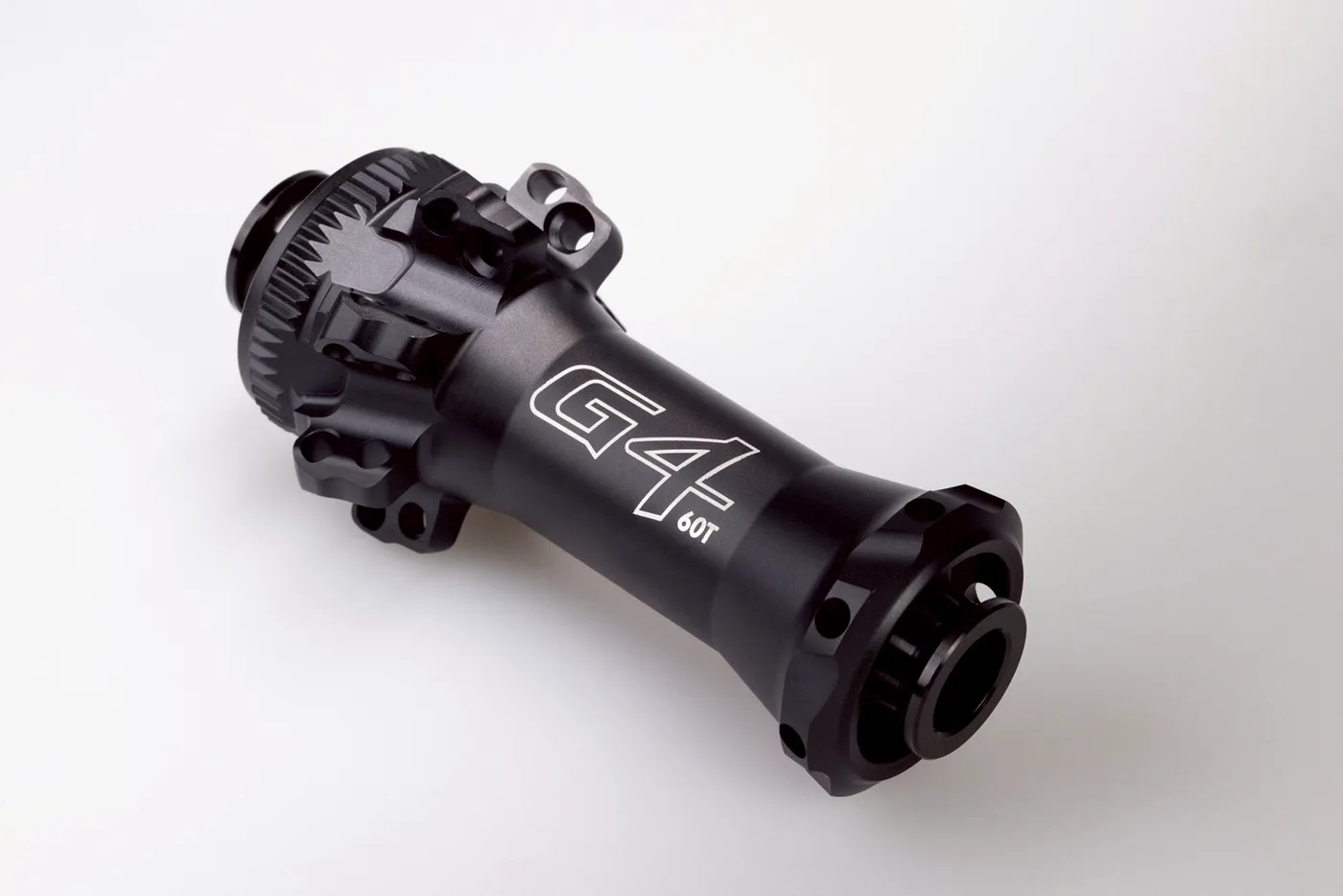
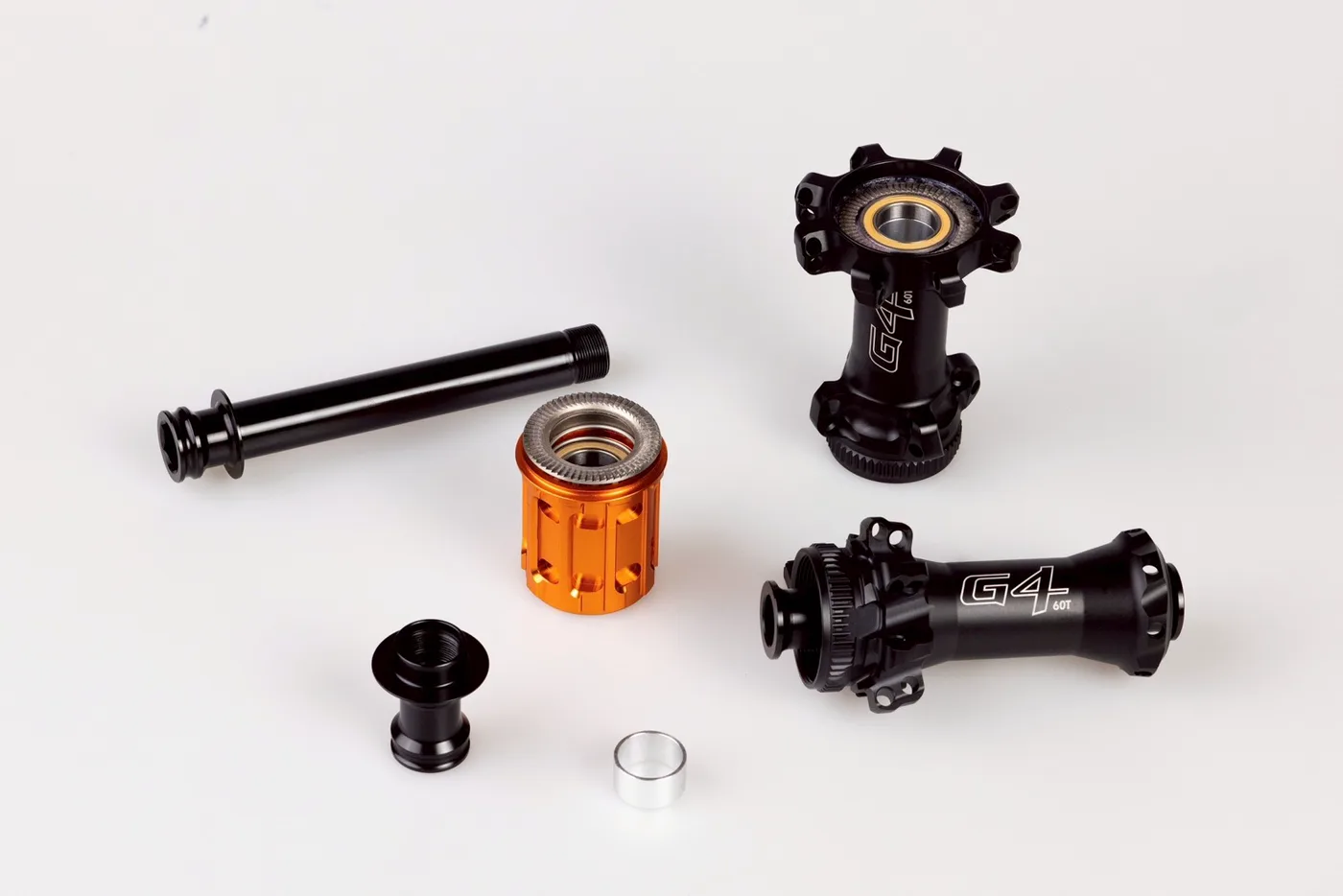
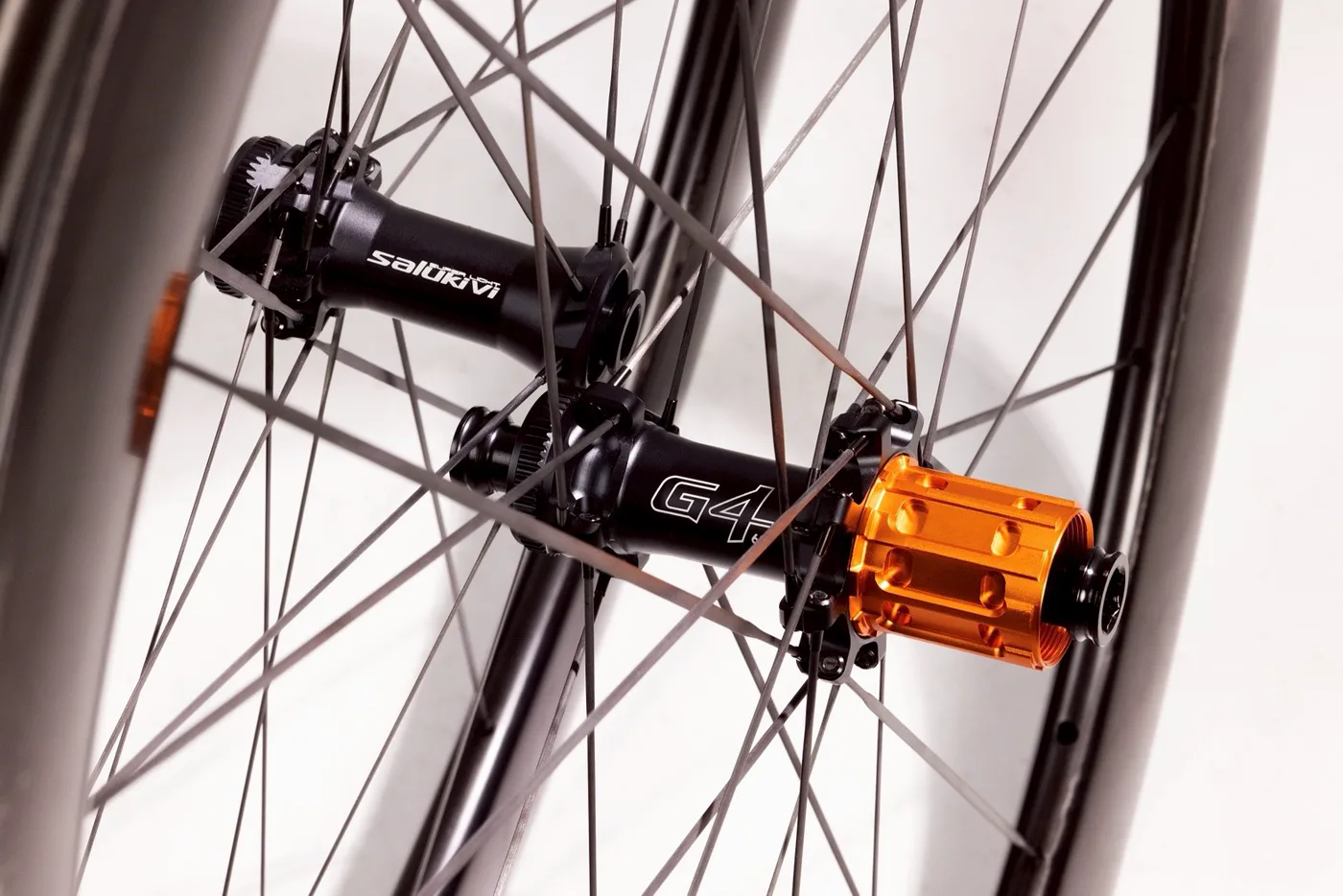
The hub is where most of the last decade's change is concentrated, and none of it is visible from outside. Salukivi has published four generations of its KLD hub. The first, in 2018, was built around an ultralight disc hub. The second, in 2020, moved to a star ratchet. The third, in 2023, switched to 7075 aerospace-grade aluminium. The fourth, the KLD-G460T, is scheduled for 2026 and carries several patents.
Going from pawls to star teeth has the most direct effect. Traditional pawls engage a few at a time, so the engagement angle is wide and there is a noticeable dead spot before the drive picks up. A star ratchet engages a full ring of teeth at once, tightening that angle and cutting the slack you feel when standing on the pedals. The cost is higher machining precision and more attention to cleaning and servicing.
Bearings are a separate thread. Salloy distributes CeramicSpeed bearings alongside SAPIM spokes and SCHWALBE tyres, which between them make up most of the parts list for a built wheel. Ceramic bearings show their advantage most clearly at low load and high speed, and whether they are worth fitting depends on how you ride and how willing you are to service them.
Two routes into wheels in Taiwan
Salukivi took the own-brand route. The brand was founded on 18 March 2017 by a team with more than twenty years in the bicycle industry, made its name early on KOM race results, began exhibiting internationally in 2018, sponsored a deaf riders' round-Taiwan event that same year, and released a co-branded product with PAX in 2022. The brand now sits under the PAX site run by Yee Jee Technology.
Salloy took the distribution route. Founded in 2002 at No. 691-3, Fuya Road, Xitun District, Taichung, the company positions itself as a distributor for bicycle brands while also running technical education and event promotion. Its portfolio includes SRAM, RockShox, AVID, TRUVATIV, ZIPP, QUARQ, CeramicSpeed, SAPIM, SCHWALBE, TIME, Hammerhead, Busch & Müller, Ochain and R.S.P., covering shifting, braking, suspension, wheels, spokes, tyres, power meters, navigation and service lubricants.
The two routes mean different things to a rider. An own-brand wheel is designed as one piece, with hub, rim and spokes decided by the same hand. A distributor gives breadth of choice, so when a single component needs replacing or upgrading there is something to factory specification available.
Choosing wheels, and flying with them
A spec sheet shows weight and depth but not which terrain a wheel suits. The Xinmedia test of the Salukivi KLD30 is a useful example. That wheelset weighed 1185 grams at 30 millimetres deep and 25.8 millimetres wide, laced with SAPIM CXR spokes, 18 front and 24 rear, rated to a 90 kilogram rider limit. The tester found the feedback direct and firm when standing on steep pitches, but described a lack of drive above 40 kilometres per hour, and so recommended it for races with plenty of undulation at moderate speed rather than events that sit at 40 to 50.
That verdict is more useful than any single number. The same wheelset behaves very differently on a long Wuling climb and in a flat criterium, so decide which roads it is for before you buy. A Taiwan trip that mixes flat island-loop riding with the Wuling climb usually ends up on a middle depth as the compromise.
Flying with wheels involves a fixed set of tasks. Take the wheels out of the frame and pack them separately, keep the skewers or thru-axles apart, remove the rotors and lay them flat so they do not warp, and pad both sides of the hub so the axle takes no load. Once rebuilt in Taiwan, check rotor bolt torque and wheel true again before you ride.
FAQ
Are carbon spokes actually better than steel?
Both are on the market and the difference is a trade-off. Carbon spokes are light and stiff, but once damaged they usually cannot be dealt with at the roadside. Steel spokes are far easier to service, any shop in the world can true them, and specifications from brands like SAPIM are easy to match. On a long trip into remote areas, serviceability is worth counting.
Should I bring my own wheels to Taiwan?
It depends on the itinerary. If the trip is mostly climbing and you already own a light set, bringing them makes sense. If you are riding flat roads for a few days, the extra baggage and the risk of a rebuild may not pay off. Either way, having a shop check rotors and wheel true after you land is a step you cannot skip.
Does 24EZGO sell wheels or parts?
No. We do three things, airport bike transfers, island-tour bike transfers, and race SAG support. The brands and companies mentioned here are Taiwanese businesses actually doing this work, described from their own public pages, so please approach them directly for purchases and enquiries.
Sources
- 獵犬 Salukivi 品牌與產品沿革|PAX(裕仁工業科技)
- PAX 裕仁工業科技股份有限公司
- 頂成有限公司 SALLOY|關於我們與代理品牌
- 欣傳媒|獵犬 Salukivi KLD30 碟煞輪組裝備實測
Rules and road conditions change — always check the official announcements before you travel.
Related guides
- Xianshan KOM Guide|Racing and Reaching Nanzhuang
- When to Ride Wuling Month by Month, and What 3,275 m Means Where You Come From
- Wuling Hehuanshan Cycling|Taiwan's Highest Road, 3,275m
Elsewhere in the ecosystem
- power · AI Trainingreads power meter files and writes the day's training prescription
- 2026 Miaoli Round House Criteriumthe seventh TCU city criterium, raced around a Hakka round house
Need a support vehicle?
Tell us your plan and we will suggest an option based on group size, bike count, and days.